
All places
96 places found in South Zealand
Bregentved Gods
Bregentved Gods near Haslev is one of Denmark's largest estates, with landholdings of around 6,250 hectares of which approximately half is woodland. The estate's history can be traced back to 1319, and over the centuries it passed through various aristocratic hands before Frederik V gave it in 1746 to his prime minister and close adviser A.G. Moltke. Since then it has remained in the Moltke family. The main building consists of three wings: the north wing dates from the 17th century, while the south and east wings were built in 1890 in Neo-Rococo style. The building is easily recognisable by its large copper spire, and all three wings are listed.
📍 Koldinghus Allé 1B, 4690 Haslev
Broskovvejen
One of Denmark's best-preserved ancient roads, located approximately 5 km north-west of Præstø. The almost 70-metre-long and 3.5-metre-wide paving was laid during the Late Roman Iron Age (300–400 AD) to make it possible to cross a wet ford over Hulebækken. On top of the Iron Age road lies a somewhat less carefully built medieval road. The road was discovered in 1949 during drainage work, excavated by the National Museum, and is today a listed ancient monument — cleared in 2009 so the stonework is again visible. A footpath leads the last approximately 260 metres out to the road.
📍 Broskovvejen, 4640 Faxe
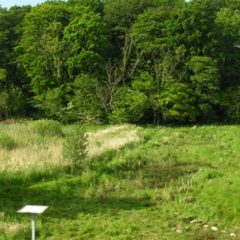
Busene Have
On the south-eastern tip of Møn, around four kilometres east of Klintholm Harbour, lies Busene Have — an old coastal forest containing one of Denmark's richest landscapes of ancient monuments. In and around the forest are traces from almost the entire prehistoric period: a long barrow and ten protected burial mounds, probably from the Bronze Age, as well as standing stones and Viking graves. One of the best-known finds is a sacrificial well from the Late Bronze Age, around 500 BC, built in a hollowed-out alder trunk. On the western edge of the forest, atop the coastal cliff, also lies Brøndehøje Skanse, a redoubt built during the Swedish Wars in the 1600s. The forest lies dramatically along the coast with direct access to the beach, and the varied flora and untouched nature make the site an obvious destination for anyone wishing to experience prehistoric burial culture in an evocative natural landscape. The Danish Agency for Culture and Palaces has put up information boards about both the redoubt and the area's ancient monuments.
📍 Hampelandsvej, 4791 Borre
Damsholte Kirke
Damsholte Church on western Møn is the only Danish village church built in Rococo style, making it an architecturally unique monument. The church was built in 1741–1743 by architect Philip de Lange. The yellow, rendered church features a bulbous dome at the west end, a narrow side entrance and a short vestibule. The long rectangular interior is dominated by columns and a large altar arrangement with the pulpit raised high above the altarpiece — all in wood with muted grey tones reflecting the spirit of Pietism. Around 1800 a funerary chapel was added for the LaCalmette family, owners of the church and Marienborg estate.
📍 Grønsundsvej 292, 4780 Stege
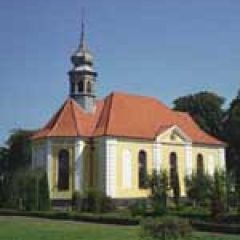
Danmarks Borgcenter
Danmarks Borgcenter in Vordingborg conveys the castle culture of the Middle Ages based on the ruins of Vordingborg Castle — one of Denmark's most important medieval fortresses. The museum features interactive exhibitions about kings, knights and everyday life in the Middle Ages. The iconic Goose Tower with the golden goose on top can be climbed and offers a fine view over the town and the fjord.
📍 Slotsruinen 1, 4760 Vordingborg

Den sydlige kanon
The southern gun turret at Stevns Fort, officially designated Piece 2, is one of the fort's two twin-barrelled 150 mm armoured turrets and together with the northern turret (Piece 1) forms the fort's original main armament. Unlike the northern turret, Piece 2 stands freely accessible outside the fence of the Cold War Museum Stevns Fort and can be seen without an entrance fee. The cannons originate from the German battleship Gneisenau, which was decommissioned in 1942. Two of the ship's twin turrets with 15 cm secondary artillery were installed during the occupation at the coastal battery at Grådyb on Fanø, and after the war were moved to Stevns, where they were mounted as the fort's main battery in 1952–55. The cannons had a range of around 22 km and were aimed at the southern approach to the Øresund and Faxe Bay, where they were to protect sea minefields planned in the event of war to prevent the Warsaw Pact fleet from breaking through into the Kattegat and onwards into the Atlantic. Piece 2 and the surrounding southern section of the underground installation were mothballed in the early 1980s when the fort was modernised and concentrated around the northern section. The installation — including both gun turrets — was listed in 2012 as part of the overall Stevns Fort. The turret stands on the cliff edge with views over the Øresund and is connected to the underground guided tour at the museum, where you can see the ammunition magazine and the elevator that transported shells up to the cannon. The turret itself can be seen from outside year-round; access to the interior fort system requires a guided tour at the museum. Located at Korsnæbsvej, Rødvig, just south of the main entrance to the Cold War Museum Stevns Fort. Accessible from the hiking trail along Stevns Klint.
📍 Korsnæbsvej, 4673 Rødvig Stevns
Dobbeltjættestuen Månehøj
Månehøj — also written Måneshøj — is a passage grave from the Funnel Beaker Neolithic period, located on the Svinø peninsula north-west of Vordingborg. It was built around 3200 BC and is one of the relatively few well-preserved double passage graves in Denmark: a long burial chamber divided in two by a so-called dividing stone. The grave was excavated in 1908 — begun by the farm's owner and shortly afterwards taken over by the National Museum — where skeletal remains of men, women and children were found, along with around 300 artefacts, including pottery from the Funnel Beaker culture and a rare, almost intact 'face vessel' with eyes and eyebrows. The finds are kept at the National Museum. In 2004 the monument was thoroughly restored, with supporting stones straightened and the heavy capstones repositioned. The passage grave today stands with an open layout — without its original covering mound — giving a clear view of its construction. The site has free access and is signposted.
📍 Svinøvestervej, 4750 Lundby
Dodekalitten (nær Sakskøbing)
On a hillock near Kragenæs on the island of Lolland, 12 monumental stone sculptures rise in a circle 40 metres in diameter. Each basalt monument stands 7–9 metres tall and weighs 25–45 tonnes, with the top carved as a face gazing inward toward the centre of the circle. The artwork — Dodekalitten — is a collaboration between sculptor Thomas Kadziola and composer Gunner Møller Pedersen, and it is also a sound installation: each stone emits its own tone, which varies with wind and light. The narrative starting point is one of history's great natural catastrophes: when the Mediterranean, around 7,500 years ago, broke through the Bosphorus Strait and flooded the Black Sea and the advanced agricultural civilisation on its shores — an event thought to underlie the myth of the Great Flood. The project began in 2010 with the first stone placed in 2012 and is now complete with all 12 sculptures in place. The site is freely accessible all year round.
📍 Kragenæsvej, 4943 Torrig L, Danmark
Evers Grav
Evers Grav is a well-preserved long barrow from the Funnel Beaker Neolithic, dated to roughly 3950–2801 BC. It lies tucked away on the edge of the Everdruplund forest near Everdrup. The barrow measures about 38 × 8 metres and stands roughly 1.25 metres high, framed by a row of kerbstones. According to local legend, the petty king Ever — one of two brothers said to have ruled the area — is buried here, hence the name. The ancient monument is a protected site and can be difficult to find.
📍 Everdrupvej, Everdrup, 4733 Tappernøje
Falsters Minder — Museum Lolland-Falster
The Museum Lolland-Falster exhibition venue in Nykøbing Falster is housed in Czarens Hus — a listed half-timbered building from the 1690s on the corner of the town square, and one of the town's oldest buildings. The house is named after the Russian Tsar Peter the Great, who visited the inn that occupied the premises in 1716. The museum, originally founded as Falsters Minder in 1913, moved into Czarens Hus in 1923 and was state-recognised in 1946. Today the venue hosts the exhibition Museum Obscurum, which received the Historical Days Innovation Prize. The building also houses Den gamle Købmandshandel (The Old General Store) and the town's tourist information, and on the ground floor is Restaurant Czarens Hus. The venue is one of four exhibition sites under Museum Lolland-Falster, which is a state-recognised cultural history museum for Lolland and Falster.
📍 Færgestræde 1A, 4800 Nykøbing F
Falsters Virke
Falsters Virke is a semi-circular Iron Age defensive earthwork from the Late Iron Age (AD 400–800) located in Hannenov Forest in central Falster. The structure encloses an area of approximately 1 km² and is one of the largest prehistoric fortifications in Denmark. In his chronicle, Saxo records that the Falstrians repelled a Wendish siege here in 1158. The earthwork has boardwalks and information signs and is open year-round. Parking at the Virketvej/Hannenovvej junction.
📍 Virketvej 39, 4863 Eskilstrup
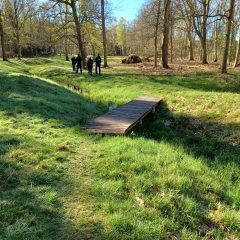
Fanefjord Jættestue
Fanefjord Passage Grave on Møn is one of the island's most beautifully preserved megalithic tombs, dating from around 3000 BC. The passage grave is situated on a hill with views over Fanefjord and is surrounded by a protected landscape zone. A quiet and almost mystical experience, particularly in fog or early morning. In the forest lie 16 protected burial mounds of various sizes from the Bronze Age. None of the mounds have been the subject of archaeological investigations, so the dating to the Bronze Age (1,700–500 BC) is based primarily on the size and landscape position of the mounds.
📍 Fanefjordvej, 4792 Askeby
Fanefjord Kirke
Fanefjord Kirke near Kokseby is one of Møn's most visited attractions and is considered one of the most beautifully decorated churches in Denmark. The church is built in Romanesque style with a Gothic addition and features a double nave. It contains an outstanding and almost complete cycle of frescoes from around 1500–1520, painted by the so-called Elmelunde Workshop. The frescoes cover the vaulted ceilings and depict biblical scenes in a vivid, folk art style.
📍 Fanefjord Kirkevej 51, Kokseby, 4792 Askeby
Folkemøde Møn
Folkemøde Møn is an annual democracy festival in the heart of Stege, bringing together politicians, experts, business leaders, cultural practitioners and engaged citizens for debates, workshops and community — with provincial life and the good life outside the big cities as the central theme. Friday is dedicated as Youth Day with approximately 12,000 young people from schools and youth education institutions. The event takes place on Stege Torv, in Storegade and surrounding streets. Held every year in August — in 2026 on 21–22 August.
📍 4780 Stege

Frilandsmuseet De Gamle Huse (Maribo)
The open-air museum De Gamle Huse in Maribo is one of the exhibition venues under Museum Lolland-Falster, beautifully situated by Bangs Have in the Maribosøerne Nature Park down towards Maribo Lake. The museum is Denmark's third-oldest open-air museum: its history began in 1923, when the chairman of the Lolland-Falster Diocesan Museum secured a plot for the preservation of old houses from the area, and the museum opened in 1927. Today, 13 half-timbered houses from Lolland-Falster have been reconstructed on the site — buildings from the late 17th century to the early 20th century that served as farmsteads, smallholdings, agricultural labourers' cottages, rectories, schools, smithies, windmills and fire engine houses. Original artefacts and small scenarios convey rural life in the 18th and 19th centuries, and gardens have been laid out along with opportunities for traditional village games. The museum also houses a steam-powered ploughing machine from 1872. The venue is well suited to a family excursion and can be combined with a walk in the surrounding nature park.
📍 Museumsgade 32, 4930 Maribo, Danmark
Fuglsang Kunstmuseum
Fuglsang Kunstmuseum is an art museum in Toreby on Lolland with roots in one of Denmark's oldest art museums and a fine collection of Danish art from 1780 to the present day. The collection comprises Danish painting, sculpture and works on paper, including pieces by Jens Juel, the Skagen Painters, Vilhelm Lundstrøm, Olaf Rude and the Cobra artists, as well as concrete art. The museum, which opened in its current building on Nystedvej in 2008, also hosts changing contemporary art exhibitions, a café and regular events and guided tours. A visit offers a journey through more than 200 years of Danish art history in beautiful, light-filled surroundings. See fuglsangkunstmuseum.dk for opening hours, prices and current exhibitions.
📍 Nystedvej 71, 4891 Toreby L.
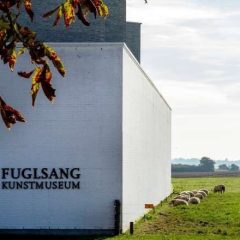
Gavnø Slot
Gavnø Castle is located on the island of Gavnø in Karrebæk Fjord south-west of Næstved and is considered one of Denmark's most beautiful Rococo castles. The site has a long history: the estate is first mentioned in the early 13th century, the main building was originally constructed in the early 15th century, and it acquired its current Rococo character during a renovation in the 1750s. The castle is owned by a foundation and is surrounded by a castle park of approximately 8 hectares. Gavnø is one of South Zealand's major visitor attractions and hosts a range of major events throughout the season, including Denmark's largest tulip festival, market days, vintage car shows and a Christmas market. The grounds also feature a café and a family-friendly climbing park.
📍 Gavnø 2, 4700 Næstved
Genforeningssten, Lov
A commemorative stone erected in memory of the reunification of Southern Jutland with Denmark in 1920. In the years around the reunification, around 650 reunion stones and memorials were erected across the country — typically unworked field stones with inscriptions, raised on the initiative of local parish councils, associations and citizens. The Danish Border Association describes them collectively as Denmark's most singular monument. This stone stands at Hammervej near Lov. All reunion stones were listed as ancient monuments in connection with the centenary of the reunification in 2020.
📍 Hammervej (ved Lovkrog Huse), Lov, 4750 Lundby
Genforeningssten, Snesere
A commemorative stone erected in memory of the reunification of Southern Jutland with Denmark in 1920. In the years around the reunification, around 650 reunion stones and memorials were erected across the country — described by the Danish Border Association as Denmark's most singular monument. This stone stands in the village of Snesere south-east of Næstved and was unveiled on 17 October 1920. All reunion stones were listed as ancient monuments in connection with the centenary of the reunification in 2020.
📍 Sneserevej (ved krydset Snesere Torpvej/Bårsevej), Snesere, 4733 Tappernøje
GeoCenter Møns Klint
GeoCenter Møns Klint tells the story of the 70-million-year-old chalk cliffs and the unique nature of Møn. The museum has interactive exhibitions on geology, fossils and the dark sky reserve that Møn is part of. A perfect starting point for a walk along the dramatic white coastal cliffs.
📍 Stengårdsvej 8, 4791 Borre
Gisselfeld Kloster
Gisselfeld Kloster is a Renaissance estate dating from 1554, located near Haslev in South Zealand, with a manor park, forests and lakes. The estate is owned by the Gisselfeld Kloster Foundation and today houses schools, residences and cultural events. The park and forests are open to the public. See gisselfeld.dk for visitor information and upcoming events.
📍 Gisselfeldvej 3, 4690 Haslev, Danmark
Gisselfeld Kultursaloner 2026
Gisselfeld Kultursaloner is a festival held in the manor park of Gisselfeld Kloster near Haslev. The festival combines music, literature and readings with access to the park and the manor over a weekend. The programme is announced in stages and typically includes intimate concerts, guided tours and local food vendors. See kultursalonernegisselfeld.dk for current dates and programme.
📍 Gisselfeld Kloster, Gisselfeldvej 5, 4690 Haslev
Grønjægers Høj
Grønjægers Høj — also known as Grønsalen — on the western part of Møn is one of Denmark's longest long barrows, with an impressive length of 102 metres. The east-west-oriented megalithic tomb from the Neolithic Funnel Beaker culture, constructed around 3500–3300 BC, contains three burial chambers and is surrounded by 145 large kerbstones. The monument lies beautifully in the landscape south of Fanefjord Church, is named after the legendary king Grøn and is publicly accessible year-round. A visit can be nicely combined with the nearby Fanefjord Church, which is known for its rich frescoes.
📍 Fanefjord Kirkevej 55, 4792
Grønnegades Kaserne Kulturcenter
Grønnegades Kaserne in Næstved is a cultural and concert venue housed in a former 19th-century military barracks. The venue hosts concerts, theatre and events featuring both national and international artists. See gkkultur.dk for the current programme.
📍 Grønnegade 10, 4700 Næstved, Danmark
Grundtvigs Mindestuer
The Memorial Rooms are a museum dedicated to the priest and hymn writer N. F. S. Grundtvig, who was born and grew up in the thatched rectory. The museum is located in the eastern wing of the rectory.
📍 Pasmergårdsvej 13, 4750 Lundby
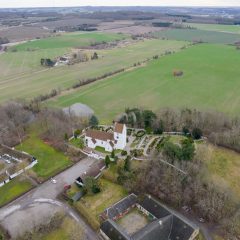
Gutter Island Garage Rock Festival
Gutter Island Garage Rock Festival is an alternative garage rock festival held at Masnedø Fort near Vordingborg, founded in 2000. The festival runs over three days with on-site camping and a programme featuring both new and established bands. There is no separate backstage area — artists and audience share the festival grounds. The festival takes place in August every other year — see gutterisland.dk for current dates.
📍 Fortovet 8, 4760 Vordingborg
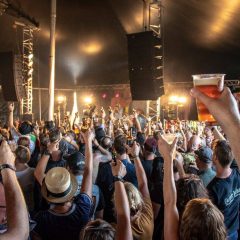
Hårbøllehuset
Hårbøllehuset is a local community and cultural centre for Hårbølle and the surrounding area on western Møn. The house contains Café Måske and is used for concerts, lectures, exhibitions, Friday dinners, flea markets and seasonal celebrations. A weekly newsletter reaches over 780 email addresses. The house can be hired by members at preferential rates.
📍 Vindebækvej 48, 4792 Askeby
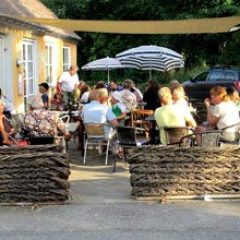
Havblik Festival 2026
Havblik Festival is a small harbour festival on Bogø Havn with free admission. The festival offers music and a relaxed summer atmosphere in the pleasant surroundings of Bogø Harbour. .
📍 Bogø Havn, 4793 Bogø By
Hellig Svends Kilde
Hellig Svends Kilde is a historic holy spring located on the grounds of Vemmetofte Convent, close to Vemmetofte Beach. According to legend, the spring rose up at the spot where the crusader Svend was washed ashore after a shipwreck off the coast — supposedly around the year 1104. The spring's ochre-tinted water was considered to have healing properties, and a chapel was built beside it as early as 1536. In recent years the Stevns-based artist Bo Karberg, together with a paving company, created a stone artwork above the spring, inaugurated in 2024, in which the ochre-coloured water flows out through four openings to form the crusaders' Maltese cross. A quiet spot beneath the forest's old trees, where it is once again possible to drink from the spring.
📍 Vemmetofte Strandskov, 4640 Faxe
Herlufsholm
Down towards the Suså river, about two kilometres north of Næstved, lies Herlufsholm — a historic complex where a medieval monastery, a manor house and one of the country's oldest schools have grown together over nearly nine centuries. The history begins in 1135, when the nobleman Peder Bodilsen donated a church to a group of Benedictine monks who settled by the river and founded Skovkloster. At the Reformation the Crown seized the monastery's land, and the last monks left in 1559. The following year, the naval hero Herluf Trolle and his wife Birgitte Gøye took over the area in an exchange with Frederik II — the king received Hillerødsholm in return, which later became Frederiksborg Castle. In 1565 the couple converted their estate into a foundation charter and established Herlufsholm School and Estate, a free school "for nobles and the children of other honest men". The school long admitted only boys; the upper secondary school opened to day pupils of both sexes in 1966, and girls were admitted as boarders from 1985. Today Herlufsholm is Denmark's oldest and largest boarding school as well as a day school for pupils from Year 6 through upper secondary, and the foundation is run as a commercial foundation where income from forestry, farming, the church and cemetery goes towards securing the school's continued operation. The complex with its listed monastery buildings, the old church and the surrounding forests stands as a living piece of Danish history — but is also home to pupils and staff, whose privacy guests are encouraged to respect.
📍 Herlufsholm Allé 170, 4700 Næstved
Holmegaard Gods
Holmegaard Gods is a historic manor house located near Fensmark north-east of Næstved. The estate can be traced back to before 1375 and today features a main building from the 17th century, constructed as a traditional half-timbered complex. Holmegaard has been in the ownership of the Danneskiold-Samsøe family for several centuries and has played a central role in the development of the area — not least in connection with the establishment of Holmegaard Glassworks in 1825.
📍 Holmegaardsvej 71, 4684 Holmegaard
HØST MØN
HØST MØN is a music festival at Masnedø Fort near Vordingborg, framed by the two Storstrøm bridges. The festival offers a programme of at least 12 bands, swimming, camping directly by the sea, organic draught beer and locally brewed gin. See moenu.dk for current dates and programme.
📍 Masnedøfortet, Masnedø, 4760 Vordingborg

Huset i Nakskov
Huset i Nakskov is a small live music venue on Blegen in Nakskov, run by the concert association Løvehjerterne since 1983. The venue hosts live concerts with a varied programme. Check the venue's own channels for the current programme.
📍 Blegen 4, 4900 Nakskov
Husflidsskolen i Kragevig
Oremandsgård's Craft School (Husflidsskolen) on Kragevigvej 13 in Vordingborg Municipality is a unique historic building from 1872 — Denmark's first husflid (traditional handicraft) school. It was founded and inaugurated on 30 November 1872 by widow Wilhelmine Hage of the nearby Oremandsgård estate, inspired by Grundtvig's folk high school movement. Up to 50 young people from the area gathered here twice weekly during winter to practise traditional craftsmanship. Students crafted furniture for Crown Princess Alexandra of England and intricate woodcarvings presented to King Christian IX and Queen Louise for their golden wedding anniversary. The school won numerous silver medals at exhibitions across Denmark and at the Paris Exhibition in 1878. The building, designed by architect Johan Schrøder in a Norwegian-inspired style with richly carved green-painted woodwork, wide eaves and yellow brick, was listed as a protected heritage site in 1979. Today it serves as a venue for private events and weddings, and hosts the annual Oremandsgård Chamber Music Festival, founded in the summer of 1990.
📍 Kragevigvej 13, Allerslev, 4760 Vordingborg
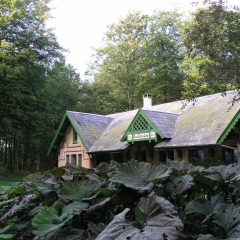
Jordehøj jættestue
Jordehøj is a Neolithic passage grave set in an open, undulating landscape on Møn. The burial chamber is approximately 5,200 years old and is considered one of Denmark's best-investigated megalithic graves. An 8-metre southeast-facing passage leads into a 10-metre-long, 2.5-metre-wide chamber with a characteristic narrowing in the middle. Cup marks are visible on one of the passage stones. The monument is visible from Grønsundvej and reached via a marked path from Pejdervej.
📍 Pejdervej 4, 4780 Stege
Jungshoved Kirke
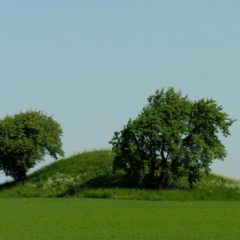
Jungshoved Kirke stands on the Jungshoved peninsula about 20 km north-east of Vordingborg. The chancel and nave were built in Late Romanesque style around 1225–1250 in chalk stone and monk brick; the nave was extended westward around 1300, with the sacristy, tower and porch added during the Gothic period and the Renaissance. Inside, the church holds an altarpiece from around 1590 with a plaster relief by Bertel Thorvaldsen depicting Christ at Emmaus, a High Renaissance pulpit of 1605–10 from the Schrøder workshop in Næstved, and remnants of Gothic frescoes including a rare Dance of Death frieze. Immediately south lies the earthworks of Jungshoved Castle, a medieval fortress that controlled shipping on Bøgestrømmen and was associated with the Gønge leader during the Swedish Wars.
📍 Hovmarken 4, 4720 Præstø

Jungshoved Voldsted
On a headland facing Jungshoved Nor, immediately south of Jungshoved Church, lies Jungshoved Voldsted — the remains of a medieval castle that gave its name to the entire peninsula. The castle is first mentioned together with the church in King Valdemar's Land Register of 1231, but is assumed to have been built around a hundred years earlier, constructed to control navigation on the Bøgestrøm. In the 14th century the northern defences were strengthened with an outer moat and a palisade barrier. Around 1500 the older castle was succeeded by the actual Jungshoved Castle, but under Christian IV the complex began to fall into disrepair, and in the wake of the Swedish Wars — with which the area is closely associated through the legend of the Gonge Chief — the castle ended up as a ruin. In the 1670s large parts were demolished and the building materials transported to Vordingborg. What remains today is a clearly visible earthwork: a rounded, triangular castle mound of around 47 by 45 metres, raised approximately five metres above the surrounding land and encircled by a wide moat. The outline of the complex is still clearly visible in the landscape, and the site is a beautiful and peaceful location with wide views over the protected fjord landscape.
📍 Voldstedvej, 4720 Præstø
Klekkende Høj
Klekkende Høj near Askeby on Møn is a rare double-chambered passage grave from around 3500 BC. The two burial chambers face opposite sides of the mound, which is unusual for Danish megalithic tombs. The mound is well preserved and easily accessible from a nearby car park.
📍 Kleckendevej 8, 4792 Askeby
Kong Asgers Høj
Kong Asgers Høj on north-western Møn, near the village of Sprove, is one of Denmark's largest and best-preserved passage graves from the Neolithic period, built around 3200 BC. The monument contains a large burial chamber of approximately 10 metres and a long stone-built passage and is named after a legendary figure. The mound was excavated in 1839 and is publicly accessible year-round via a footpath from a car park. A visit can easily be combined with the free-standing dolmen Sprovedyssen, located just around 150 metres to the south.
📍 Grønsalen 2, 4791 Borre
Køng Museum
Cultural history museum housed in the beautifully restored Gl. Øbjerggård from 1781, which was originally the main building of Niels Ryberg's linen textile factory — one of Denmark's earliest and a supplier to the Royal Danish Court until 1923. Permanent exhibition on the factory's history and the processing of flax, as well as changing exhibitions focusing on contemporary textile art. Køng also functions as an open-air museum with several preserved factory buildings from Ryberg's small ideal community, including the Spinning School and the Hospital.
📍 Bygaden 27, 4750 Lundby, Danmark
Krenkerup Gods og Park
Krenkerup Gods is a historic manor south of Sakskøbing on Lolland with roots going back to 1367, when the estate is first mentioned in historical sources. The estate is today privately owned by the Reventlow-Grinling family and is home to Krenkerup Bryggeri and a traktørsted (inn), both open to visitors. The estate's park and surrounding natural areas offer the chance for a quiet walk in historic surroundings. The area combines manor history, craft production and dining in one place, and is well suited to a half-day excursion combined with Lolland's other attractions.
📍 Krenkerupvej 33, 4990 Sakskøbing, Danmark
Kulturhuset Elværket
Kulturhuset Elværket in Næstved is a cultural centre located by the river at Ved Fjorden 11, hosting concerts, events and local music performances. See kulturhusetnaestved.dk for the current programme.
📍 Ved Fjorden 11, 4700 Næstved
Kultursalonerne Gisselfeld
Kultursalonerne Gisselfeld is an annual festival held in the castle park and historic surroundings of Gisselfeld Kloster in South Zealand. The festival is described as a slow festival, where music is blended with literature, conversations and culinary experiences, held in the second weekend of August over three days, Thursday to Saturday. The setting is the monastery's atmospheric castle park, considered among Northern Europe's most beautiful park complexes with old trees, lakes and rich birdlife. A distinctive feature is that you don't know the full programme in advance when you arrive — throughout the festival, organisers offer small intimate concerts, readings, guided tours and other experiences both at the castle and around the park. The programme emphasises immersion and presence rather than large stages. Food and drink can be purchased throughout, and the festival strives to make room for local practitioners. Tickets can be bought for one, two or three days, with overnight camping and a guided castle tour available as add-ons. It is recommended to buy tickets in advance and check current dates on the festival's website before visiting.
📍 Gisselfeldvej 12 A, 4690 Haslev
Kulturværket Maribo
Kulturværket Maribo is a cultural centre at Banegårdspladsen in Maribo, serving as a venue for a wide range of cultural events on Lolland. The building houses NørregadeTeatret and can accommodate nearly 200 guests. See noerregadeteatret.dk for the current programme.
📍 Banegårdspladsen 1, 4930 Maribo
Liselund Slot og Park
Liselund Slot is a romantic pleasure palace built in 1792 in Norman-Gothic style, surrounded by an English landscape garden with lakes, bridges, pavilions and paths. The castle stands close to Møns Klint and is managed by the Danish Nature Agency. The park is freely accessible and the exterior can be viewed at any time; the interior opens on selected occasions. See naturstyrelsen.dk for opening times and guided tours.
📍 Liselund, 4791 Borre, Danmark
Luftrumsovervågning Stensved og Skovhuse
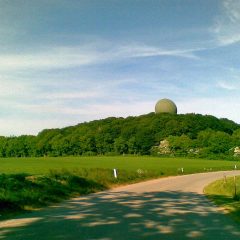
In Skovhuse near Stensved on South Zealand, the Danish Air Force opened a radar station in 1954 as part of NATO's joint air defence system. The station was one of six radar stations built across Denmark and could monitor airspace within a radius of 160 km. In 1970, the characteristic radar dome was erected housing a new radar with a range of 220 km — far enough to cover airspace over Poland and East Germany. Active until 2004, the station has been designated by the Danish Agency for Culture and Palaces as one of 25 particularly significant Cold War heritage sites in Denmark.
📍 Skovhusegade, 4773 Stensved
Magasinet Nakskov
Magasinet Nakskov is part of Theisens Gård on Havnegade in Nakskov, with a bar and a stage. The venue hosts association-based events and concerts and is home to the town's heavy metal club. Check the venue's own channels for the current programme.
📍 Havnegade 55, 4900 Nakskov
Maribo Domkirke
Maribo Domkirke is a Gothic brick church from the 15th century, situated by Maribo Lake. The church was originally part of a Bridgettine convent founded in 1416 and today serves as the parish church for Maribo, open to visitors. See maribodomkirke.dk for current opening hours.
📍 Klostergade 35, 4930 Maribo, Danmark
Maribo Jazz Festival
Maribo Jazz Festival is a recurring jazz festival in Maribo with concerts at up to 16 venues around the town. The festival draws on the New Orleans tradition and runs over four days in July. See maribojazz.dk for current dates and programme.
📍 4930 Maribo
Maribo Miniby
Maribo Miniby is a miniature park that recreates Maribo's old town district as it looked in the period approximately 1850–1900. The park contains around 60 handmade buildings constructed at 1:10 scale — merchant farms, the old town hall from 1857, the town's first hospital and much more — all built from the same materials as the originals, down to miniature bricks and roof tiles. Behind the project stands a volunteer association that began work in 1995, and the park opened to the public in 2011. One of the largest ongoing construction projects is a model of Maribo Cathedral. A living cultural project that provides a detailed insight into 19th-century market town life.
📍 Ved Stadion 4, 4930 Maribo, Danmark
Middelalderhaven i Stege
Middelalderhaven in Stege is a historical herb garden located at Kirkepladsen in the centre of Stege. The garden presents medieval plants and their uses, offering a living, green insight into plant culture from the period. A quiet and atmospheric spot in the heart of the old town, ideal for visitors who wish to combine historical curiosity with a moment of tranquillity.
📍 Kirkepladsen 1, 4780 Stege
Mogenstrup Kirke
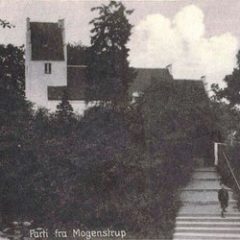
Mogenstrup Kirke was built in the 1100s from granite fieldstone and serves as an annexe church to Næstelsø Kirke. The Romanesque section contains frescoes from around 1425, signed by the painter Morten Maler, including a depiction of Christ as World Judge in the eastern vault of the chancel. The original spring block from Sankt Mogens Kilde is preserved in the church porch. The altarpiece is a plaster copy of Bertel Thorvaldsen's sculpture "Christ in Emmaus". The church formerly belonged to the noble families Gyldenløve and Danneskiold-Samsøe, becoming parish property in 1916.
📍 Kirkeskovvej 6, 4700 Næstved
Mølleporten
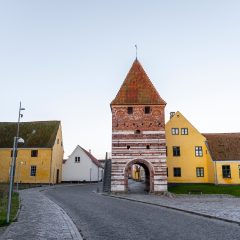
Mølleporten is Stege's medieval town gate and one of the best-preserved town gates in Denmark. Dating from the 15th century, it reflects the era when Stege was an important trading town surrounded by moats and town walls. The gate recently underwent a major restoration (2020–2025) and is included in the Møns Museum ticket. Note: not wheelchair accessible.
📍 Storegade 75, 4780 Stege
Møns Museum (Empiregården)
Møns Museum is housed in Empiregården — one of Stege's most notable old merchant farms, centrally located in the town close to the medieval Mølleport. The building was constructed as a four-winged merchant farm in the late 18th century and was in the hands of merchants and traders until 1922. Empiregården has served as a museum since 1958. The exhibitions tell the cultural history of Møn from ancient times to the present through a series of stories about the island, its people and its trade, and the museum also holds a geological collection and changing special exhibitions. With an admission ticket to the museum, visitors also gain access to Mølleporten, one of Denmark's best-preserved remnants of a medieval town fortification. The museum is operated by Museum Sydøstdanmark. Please note that Empiregården is an old, listed building on several floors and is therefore not accessible to wheelchairs or prams.
📍 Storegade 75, 4780 Stege
Museumsgården Møn
Museumsgården Møn in Keldbylille is a listed, well-preserved farmstead from the early 1800s that offers an authentic glimpse into life on a South Zealand farm during the 19th and early 20th centuries. The farm comprises a main house, barn, stable and outbuildings in their original state, and the many displayed tools and everyday objects tell the story of agriculture and daily life on Møn across generations.
📍 Skullebjergvej 15, Keldbylille, 4780 Stege
Musik over Præstø Fjord
Musik over Præstø Fjord is a Nordic folk music festival held in a garden by Præstø Fjord near Tappernøje. The festival offers professional concerts on several stages, busking, dancing, workshops, singing, campfires and communal dining. The event welcomes a broad audience across generations. Held over four days in August. See musikoverpraestoefjord.dk for current dates and programme.
📍 Smidstrupvej 69, 4733 Tappernøje
Musikstalden Næstved
Musikstalden is a small live music venue at Grønnegades Kaserne in Næstved, focusing on niche and upcoming live music acts. Check the venue's own channels for the current programme.
📍 Grønnegade 10, 4700 Næstved
Nakskov Teatersal
Nakskov Teatersal on Søvej in Nakskov is a theatre with seating for 451, a professional sound system and a stage. The venue hosts theatre performances, concerts and stand-up comedy. See nakskovteater.dk for the current programme.
📍 Søvej 6, 4900 Nakskov
Nakskov Vinfestival
Nakskov Vinfestival is a recurring festival on Axeltorv in Nakskov featuring wines, food stalls and live music from Lolland and around the world. The festival is held in August. Check the event's own channels for current dates and programme.
📍 Axeltorv, 4900 Nakskov
Næstved Automobilmuseum
Næstved Automobilmuseum is a private car museum with over 175 vehicles, around 100 motorcycles and mopeds, as well as agricultural machinery and aircraft. The museum also includes a reconstructed 1950s street with shops and workshops. See naestvedautomobilmuseum.dk for current opening hours and prices.
📍 Skellet 19, 4700 Næstved, Danmark
Næstved Museum
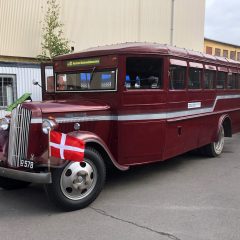
Næstved Museum is housed in Helligåndshuset — a building with medieval roots and the only preserved house of the Holy Spirit in Denmark. The building has served over time as a hospital, nursing home and poorhouse, before being converted into a museum in 1927. The exhibitions tell the history of Næstved and the surrounding area from the earliest hunters and farmers, through the Viking Age raids from Vester Egesborg and the vibrant Middle Ages, to industrialisation, including the well-known ceramics company Kähler. The museum also hosts changing special exhibitions and is operated by Museum Sydøstdanmark.
📍 Ringstedgade 4, 4700 Næstved
Næstved Musikforening (koncerter)
Næstved Musikforening organises concerts in and around Næstved featuring classical music, jazz and chamber music. Events are held at various venues across the town. See naestvedmusikforening.dk for the season programme and tickets.
📍 Næstved, Danmark
Nordhavn Live
Nordhavn Live is a concert series at Nordhavnen in Vordingborg, featuring live music on two Saturdays during summer. Admission is free. See bycentrum.dk for current dates and programme.
📍 Nordhavnen, 4760 Vordingborg
Nyord Kirke
Nyord Kirke is the small, peaceful parish church on the island of Nyord north of Møn. The church stands at the heart of the well-preserved historic village and is a natural focal point on the island. The modest church reflects Nyord's distinctive spirit – an island that has largely retained its historic character with thatched houses and cobbled lanes. Visit the church as part of a trip to Nyord Enge and the nature reserve.
📍 Søndergade 1, Nyord, 4780 Stege
Nyord Landsby
Nyord Landsby is considered one of Denmark's best-preserved villages. All the farms are built in half-timbered style with whitewashed façades, and the oldest part of the village dates from before 1800. The fact that Nyord escaped major redevelopment is due to the island's unusual economy: for generations, residents lived from a combination of fishing and piloting — guiding ships safely through the narrow waters south of Zealand to Stege. From 1721, the right to pilot was tied to individual farms, which meant properties rarely changed hands and the structure remained unchanged. The redistribution of farmland did not reach Nyord until 1820, much later than on the mainland. Today Nyord Landsby stands as a living architectural monument with a village pond, low houses and the calm that characterises a community that never grew large. The island is connected to Møn by a narrow bridge.
📍 Nyord, 4780 Stege, Danmark
Nysø Gods
Nysø Gods near Præstø is a neoclassical manor estate from the 19th century, best known for its connection to the Danish sculptor Bertel Thorvaldsen. Thorvaldsen stayed at the estate with Baroness Christine Stampe and created a number of sculptures here. The estate is surrounded by a park and the fjord. The manor itself is not a public museum, but the associated studio can be viewed. QA should verify visiting conditions and find an official URL.
📍 Nysøvej 9, 4720 Præstø, Danmark
Orebygaard (nær Sakskøbing)
Orebygaard is a historic estate near Sakskøbing on Lolland with roots going back to the Middle Ages. The complex includes buildings from different periods and is surrounded by parkland and nature. See orebygaard.dk for information on current activities and visiting conditions.
📍 Orebygård Alle 1, 4990 Sakskøbing, Danmark
Pakhus8
Pakhus8 is a live music and events venue on Præstø Harbour with a capacity of 130 standing or 100 seated guests. The venue hosts concerts, stand-up comedy and talks. See pakhus8.dk for the current programme.
📍 Havnepladsen 8, 4720 Præstø
PAOLO'S JAZZ CLUB
Paolo's Jazz Club is an intimate concert venue on western Møn, created by Italian-born pianist, bandoneonist and composer Paolo Russo together with his wife, singer and voice teacher Katrine Krog Russo. The club was established in June 2022 with the vision of a place where music comes first, and holds concerts approximately once a month. The programme ranges widely — from jazz and Danish folk to Cuban and Latin American music to classical — with musicians from both the local area and the rest of the world. The club, housed in a former farm building set amidst nature, is known for the uniquely intimate atmosphere between international top names and their audience.
📍 Vollerupgade 55, 4792 Askeby
Præstø Litteraturfestival
Præstø Litteraturfestival is an annual summer event in the charming town centre of Præstø, bringing together authors, book lovers and curious visitors for two days of readings, conversations and concerts. The festival takes place in Adelgade and on two stages: Biografscenen in Bio Bernhard and Havescenen behind the town. Many outdoor activities are free of charge. The festival is a vibrant cultural meeting place with room for both established names and debut writers.
📍 Adelgade, 4720 Præstø
Ravnsborg Voldsted
Ravnsborg Voldsted lies close to the coast in Ravnsby Bakker on the northern shore of Lolland facing Smålandshavet. Count John the Mild of Holstein built a castle here in 1330 as the seat of his domain over Lolland. Queen Margrethe I acquired the castle in 1400; it then served as a royal residence until demolition around 1510. Today the castle mound rises 18 metres above sea level. Free access with information boards on site.
📍 Fyrværkerivej 1 ,4943 Torrig L
Reventlow-Museet Pederstrup
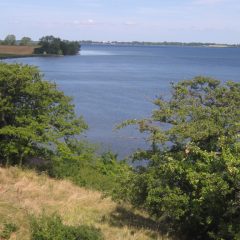
The Reventlow Museum Pederstrup tells the story of one of the key figures behind the Danish agrarian reforms: Count Christian Ditlev Frederik Reventlow (1748–1827), who as landowner and statesman was a driving force behind the abolition of the "stavnsbånd" (adscription) and the introduction of tenant farmers' freedoms in the 1780s. The museum opened in 1940 in the historic main building at Pederstrup, where Reventlow lived from 1813 until his death in 1827, and is today part of Museum Lolland-Falster. The exhibition presents Reventlow's political work through portraits, furniture and personal items from the period, offering a glimpse into aristocratic family life around 1800. The building is surrounded by Reventlow Park — a beautifully landscaped garden with free year-round access, historic monuments and pleasant garden pavilions.
📍 Pederstrupvej 124, 4943 Torrig L, Danmark
Rosenfeldt Gods
Rosenfeldt Gods is a private estate near Vordingborg with medieval roots, located close to Vordingborg Dyrehave and the coastal areas to the south. See rosenfeldt.dk for information on the estate's activities and any visiting opportunities.
📍 Rosenfeldtvej 1, 4760 Vordingborg, Danmark
Rødeled Pottemageri
Rødeled is one of Denmark's oldest still-active pottery workshops, located about 1 km west of Præstø. The site was founded in 1898, when potter Hans Peter Knudsen moved his earthenware factory here, and for more than 100 years three generations of the Knudsen family ran the workshop with traditional Danish pottery craft — tulip jugs, postpartum pots, potato bowls and "Præstø bowls". After the family's time, the pottery passed to the Rødeled Foundation, and since 2019 ceramicist Klaus Kristensen has continued running the site as an open workshop with both traditional earthenware and modern stoneware. The listed building with its historic workshop is an experience in itself.
📍 Rødeledvej 1, 4720 Præstø
Rønnebaeksholm Live
Rønnebæksholm is an arts and cultural venue on a historic estate near Næstved. The site hosts art exhibitions and holds concerts and cultural events in its historic buildings and parkland. See roennebaeksholm.dk for the current programme and tickets.
📍 Rønnebæksholm 1, 4700 Næstved
Sakskøbing Kirke
Sakskøbing Kirke is a medieval church situated in the centre of Sakskøbing. The church has its roots in the 13th century and is one of the town's prominent buildings. See sakskobingkirke.dk for information on services and events.
📍 Kirkepladsen 1, 4990 Sakskøbing, Danmark
Sakskøbing Sukkerfabrik (Sukkermuseet)
Sakskøbing has historically been the centre of sugar production on Lolland. At the old sugar factory, visitors can see exhibitions about beet growing and the significance of the sugar industry to the island's economy and culture. The sugar museum is part of Museum Lolland-Falster. See museumlollandfalster.dk for opening hours and tickets.
📍 Sukkerfabrikken, 4990 Sakskøbing, Danmark
Seniorfestivalen Marielyst
Festival at Højskolen Marielyst with concerts, talks, debates and lectures over two days — Denmark's only festival aimed at seniors. The school's park is transformed into a festival venue with events from morning to evening on several outdoor and indoor stages, and the festival attracts around 1,800 guests each year. Event: Seniorfestivalen Marielyst. Held annually in July over two days.
📍 Bøtøvej 2, 4873 Væggerløse
Silderuten
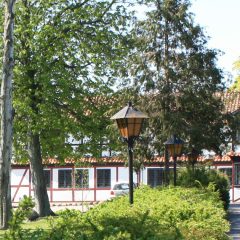
Silderuten (the Herring Route) is a historic town walk in Stege on Møn with 30 stops guiding visitors around the medieval town centre. The route is named after the herring trade that brought Stege its greatest era of prosperity: from around 1430 to 1530, Møn's stalls at Falsterbo and Skanør accounted for a third of all Danish stalls. The town's name is said to derive from the Old Norse word for stakes driven into the ground — a sea barrier Saxo Grammaticus refers to as 'the Iron Lock at Stikae'. The route starts at House of Møn, Storegade, and passes Mølleporten, the old town hall by M.G. Bindesbøll, the Latin School, Kammerrådgården and Stege Church. Free; see silderuten.dk.
📍 Storegade 2, 4780 Stege

Slotø
Slotø is a small island in Nakskov Fjord with the ruins of a medieval castle and shipyard built by King Hans in the late 15th century. The island is accessible by boat and is a protected ancient monument. See visitlolland-falster.com for practical information about access.
📍 Slotø, 4900 Nakskov, Danmark
Søllested Bio- og Kulturhus
Søllested Bio- og Kulturhus on Stationsvej is a community-run cinema and cultural centre with a single auditorium for 76 people. The cinema has had digital and 3D projection since 2011 and shows current films. The venue is also used for cultural events and community activities. See soellestedbio.dk for the current programme.
📍 Stationsvej 6, 4920 Søllested
Sømarkedyssen
Sømarkedyssen rises on a hilltop east of the village of Sømarke on Møn. The dolmen dates to around 3400 BC and has a near-octagonal chamber of six upright stones topped with a massive capstone. The covering stone over the passage is incised with more than 180 cup marks, thought to date from the Bronze Age. The monument is easily accessible from the roadside.
📍 Stendyssevej, 4791 Borre
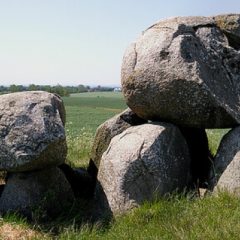
Sparresminde Jættestue
The Sparresminde passage grave, between Damsholte and Neble on Møn, is undoubtedly among Denmark's top ten megalithic tombs. This magnificently well-preserved collective grave was built by the Funnel Beaker Culture during the farming Stone Age around 3,200 BC. The passage grave perfectly illustrates the architectural capabilities of early farming communities and the colossal investment of both time and labour that went into the construction of these graves.
📍 Sparresminde, 4700 Næstved
Stars (Vordingborg)
In a converted cinema on Algade in Vordingborg, the music venue STARS has since 1998 been one of South Zealand's most important cultural meeting points. Over the years it has hosted more than 1,500 concerts and events for a combined audience of over 150,000 guests, and today it presents over 100 concerts a year with a clear focus on live rhythmic music. STARS has been designated a regional music venue by the Danish Arts Foundation — most recently re-designated for the period 2025-2028 — a status that comes with an obligation to bring high-quality live music across many genres close to its audience and to give talent, emerging artists and niche genres good conditions. There are no genre restrictions; alongside concerts, the programme also includes blues jam sessions, comedy, music quizzes, open mic nights and family concerts, while the intimate stage Smallstars provides space for smaller, close-up experiences. The venue is run by a small permanent staff supported by around 120 volunteers and is known for its good sound, close audience contact and relaxed atmosphere in its historic setting.
📍 Algade 84, 4760 Vordingborg, Danmark
Stavreby
Stavreby is a small, idyllic village on the Jungshoved peninsula facing Præstø Fjord. The village offers a charming rural atmosphere, and a walk through its streets gives a sense of the quiet life by the fjord. Just south of the village lies Stavreby Bådehavn — described by many as Denmark's cosiest and smallest fishing harbour, where a few active commercial fishermen still remain. The harbour is home to the amateur fishing association Bøgestrømmen/Præstø Fjord and provides the setting for recurring events such as the annual garfish competition on Ascension Day and Havnens Dag, when people from near and far flock to the small harbour to sample fresh fish. Stavreby is situated in the middle of the protected fjord landscape around Jungshoved and is an ideal stop on a trip around the peninsula, whether by bicycle, on foot or by car.
📍 Stavreby Strandvej, 4720 Præstø
Stege By og Voldanlæg
Stege is Møn's only market town and contains one of Denmark's best-preserved medieval ramparts. The town's moat and earthworks are nearly intact — they survived because the expected urban development never took place. The Mill Gate (Mølleporten), a solid four-storey brick gate tower from the late 15th century built in monk brick with white chalkstone bands, is one of only two surviving medieval town gates in the whole country and is first mentioned in writing in 1531. The gate controlled access to the town's market square and trading life; at night it was closed to protect the citizens and their valuables. The Mill Gate and the ramparts have been restored with support from the A.P. Møller Foundation and Realdania and can be viewed freely. The town of Stege also offers a lively shopping street, cafés and restaurants, and the nearby Møn Museum (Empiregården) tells the cultural history of the town and the island.
📍 4780 Stege, Danmark
Stege Kirke
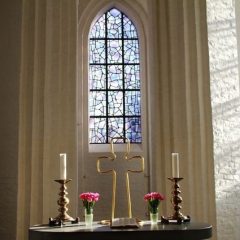
Stege Church — also known as Sct. Hans Kirke — is a Romanesque-Gothic church in Stege on Møn. The oldest part dates from 1200–1250, built of monastic bricks with apse, choir and nave; during the Gothic period, 1460–1525, the church was expanded to its current size. The church is easily recognisable by its prominent tower and characteristic vaulted arches in the central nave. Inside, the chancel window is a glass mosaic by Sven Havsteen-Mikkelsen depicting ivy as a symbol of eternal life; the altar table and chandelier were designed by Alan Havsteen-Mikkelsen and consecrated in 1990. The church is open every day 8.00–19.00 and also offers pilgrimage apartments.
📍 Kirkepladsen 1, 4780 Stege
Stiftsmuseet Maribo
Stiftsmuseet in Maribo is one of the exhibition venues under Museum Lolland-Falster and tells the cultural history of the region from the Ice Age to the present. The museum has its roots in Lolland-Falsters Stiftsmuseum, which was founded in the 19th century and is thus one of the oldest museum institutions in the region; today it is housed in a prominent museum building from 1890, designed by architect Ove Petersen, located by Maribo Station. The museum's most talked-about exhibition tells the story of Stone Age girl Lola, who lived on Lolland approximately 5,700 years ago. Her story could be reconstructed because archaeologists at an excavation found a piece of chewed birch pitch whose DNA revealed details about the girl who had once chewed it. In addition to the Stone Age exhibition, the museum holds collections of prehistoric finds, rune stones and medieval church furnishings — including a collection of chancel arch crucifixes in the exhibition 'Oh my God!' — as well as an exhibition about the Polish seasonal workers who came to Lolland from the late 19th century to work in, among other things, the beet fields. With its blend of archaeology, medieval and local history, Stiftsmuseet is an obvious stop for those wishing to understand Lolland-Falster's long and layered past.
📍 Banegårdspladsen 11, 4930 Maribo
Sukkerfabrikken Møn
Sukkerfabrikken Møn in Stege is a cultural venue housed in the historic buildings of a former sugar factory. The site includes Dansesalen with capacity for up to 600 guests, Den Böhmiske Hal for classical concerts, as well as exhibitions and trade fairs. See sukkerfabrikken.net for the current programme and tickets.
📍 Stege Sukkerfabrik, 4780 Stege
Svend Gønges Hule
In Bønsvighoved Skov on the Jungshoved peninsula near Præstø lies the passage grave Svend Gønges Hule — a Stone Age burial chamber roughly 5,200 years old, built by the Funnel Beaker culture, the first farmers in Denmark. The capstone above the chamber displays beautiful bands of red granite. The name itself, however, has nothing to do with antiquity: it derives from a legend about Svend Poulsen Gønge, "the Gønge Chieftain", who according to tradition was one of the leading forces in the resistance against the Swedes during the Swedish Wars of 1658-60. The story tells that he hid in the passage grave when the Swedes ravaged Jungshoved and captured Jungshoved Castle — a tale that became nationally known through Carit Etlar's 1853 novel "Gøngehøvdingen". An information sign at the site elaborates on the history of both the burial chamber and the Gønge Chieftain. About 800 metres northwest of the passage grave lies the site of an even older long barrow, so a visit can easily be combined with a short walk through the forest, which covers around 196 hectares stretching along the shallow coast.
📍 Bønsvigvej 31, 4720 Præstø
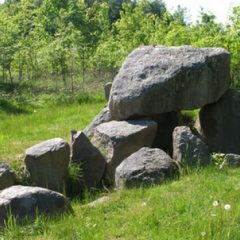
Svinø Mindelund
Svinø Mindelund is a memorial grove and war cemetery immediately north of Svinø Church on the Svinø peninsula south of Næstved. During the Second World War, the German occupying forces designated Svinø as one of five central burial sites in Denmark for Allied airmen who crashed over southern Zealand, Møn and Lolland-Falster and the surrounding waters — probably due to its proximity to the flight school at Avnø Air Base. In total, 108 Allied airmen were laid to rest here: 62 from Britain and Commonwealth countries and 46 Americans. The American airmen were exhumed in 1948–49 and either reburied at a military cemetery in Belgium or repatriated to the United States. The memorial grove was inaugurated in 1950 on the fifth anniversary of Denmark's liberation and is today maintained by the Commonwealth War Graves Commission. Every 4 May in the evening a commemorative ceremony is held at the graves with a church service, speeches, wreath-laying and a ceremonial flypast — one of the country's largest events of its kind.
📍 Svinø Kirkevej 9, 4750 Lundby
Tapperiet
At Søndre Havn in Køge, in a former industrial area undergoing rapid urban development, lies Tapperiet — a music venue and youth culture house based in an old gas bottling hall. The venue has hosted concerts since 2006, and the raw, authentic industrial building has been preserved and forms a large part of the atmosphere. In order for the venue to continue as a concert hall in the middle of a growing residential area, the building received a distinctive grass-covered roof structure in 2014–2015, designed by Tegnestuen Vandkunsten and jointly funded by Køge Municipality, Køge Kyst and Realdania; the green 'overcoat' dampens the sound while also creating a foyer with space for additional events. Tapperiet presents around 50 concerts a year divided into a spring and an autumn season, with an emphasis on both well-known headline acts and new artists on the Danish live music scene across a broad range of genres. For the years 2025–2028 the venue, together with Teaterbygningen and Bygningen in Køge, has been designated a Regional Music Venue by the Danish Arts Foundation. Alongside concerts, the venue functions as a youth culture house for young people aged 13 to 25, offering communal meals, a makerspace, rehearsal facilities and a skatepark — a living cultural laboratory where events by, for and with young people are continuously developed and experimented with.
📍 Søndre Badevej 1, 4600 Køge
Teaterbygningen Køge
Teaterbygningen is Køge Municipality's cultural centre and one of the town's historic landmarks. The building opened in 1884 and has for more than a century provided the setting for countless cultural experiences — today with a broad programme of concerts, children's theatre, comedy, lectures and community events for audiences of all ages, often driven by the venue's many volunteers and association members. The building is centrally located in Køge close to public transport and is known for its distinctive, raw facade, which over the years has been the subject of several local debates. For the years 2025–2028, Teaterbygningen, together with the music venues Tapperiet and Bygningen, has been designated a Regional Music Venue by the Danish Arts Foundation.
📍 Bag Haverne 1, 4600 Køge
Thorvaldsen Samlingen på Nysø
Thorvaldsen Samlingen is a small art museum at the manor Nysø near Præstø Fjord. The museum holds the works that sculptor Bertel Thorvaldsen (1770–1844) created in his final years, when he frequently lived and worked with the Stampe family at Nysø Estate. The collection comprises more than 50 original plaster sculptures as well as drawings and unique clay models that provide insight into the artist's creative process — among the key works is Thorvaldsen's life-size self-portrait statue. Baroness Christine Stampe had a studio built for him in the estate's garden in 1839, and the museum opened to the public in 1926. During the Golden Age, Nysø was a gathering place for the great artists and writers of the time, including H.C. Andersen, N.F.S. Grundtvig and B.S. Ingemann. The museum is housed in the estate's eastern wing; the main building and studio are private residences and not open to visitors. It is typically open during the summer season and to groups by arrangement — see current opening times and prices on the museum's website.
📍 Nysøvej 9, 4720 Præstø
Vordingborg Festuge
Vordingborg Festuge is six days of concerts from Monday to Saturday in week 28. The festival has free entry, so everyone regardless of income can experience major concerts. You support the festival by buying food and drinks at the festival venue. The festival is VAT-exempt, and the surplus is distributed to local associations in the municipality. Event: Vordingborg Festuge. Six days of concerts and free entry.
📍 Vordingborg, 4760 Vordingborg
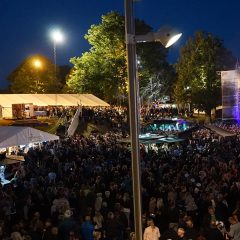
Vordingborg Teater og Kulturhus
Vordingborg Teater og Kulturhus on Chr. Richardtsvej is Vordingborg's main cultural venue, staging theatre performances, concerts and other cultural events. The house features both professional and amateur performers. See vordingborg.dk for the current programme and tickets.
📍 Chr. Richardtsvej 43, 4760 Vordingborg, Danmark