Your guide to exciting places in South Zealand.
Language
Masnedø is a small island near Vordingborg, connected to Zealand and Falster via the Storstrøm Bridge road. The island has green areas, a harbour and views of the new Storstrøm Bridge under construction. Masnedø Fort, an old coastal fortification, is open to the public and is also used for festivals and cultural events.
📍 Masnedø, 4760 Vordingborg, Danmark
The southern section of Susåstien follows the Suså river from the Næstved area southwards through woodland, open meadows and village environments. The route is suited to day hikes and is signposted along marked stretches. See naturstyrelsen.dk for maps and information on access and starting points.
📍 Susåen nær Næstved, Danmark
Maribo is an atmospheric cathedral city on Lolland, which grew from a Birgittine monastery founded in 1416 by King Eric of Pomerania under the Latin name Marienbo — Mary's town. Maribo Cathedral is the only Danish cathedral built as a convent church, constructed in Gothic brick style during the 1400s, with the unusual feature that its choir faces west rather than east — unlike every other Danish cathedral. When the Diocese of Lolland-Falster was established in 1803, the old convent church received cathedral status. The town itself lies beautifully between Søndersø and Nørresø, forming the extensive Naturpark Maribosøerne — an internationally recognised paradise for birds and a high-quality nature experience with hiking trails, shelters, and water sports.
📍 4930 Maribo
Beach by the Lalandia Rødby holiday resort in southern Lolland, with family facilities and close to Lalandia's many activities and waterpark.
📍 Lalandia Centret 1, 4970 Rødby
Danhostel Næstved is located on Præstøvej south of Næstved town, surrounded by woodland and close to the Suså river. Accommodation is available in shared or private rooms and suits families, cyclists and hikers. The hostel offers good shared facilities. See current prices and availability at danhostel.dk.
📍 Præstøvej 65, 4700 Næstved, Danmark
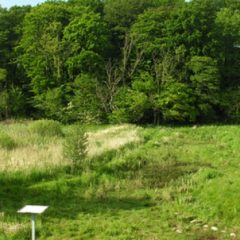
One of Denmark's best-preserved ancient roads, located approximately 5 km north-west of Præstø. The almost 70-metre-long and 3.5-metre-wide paving was laid during the Late Roman Iron Age (300–400 AD) to make it possible to cross a wet ford over Hulebækken. On top of the Iron Age road lies a somewhat less carefully built medieval road. The road was discovered in 1949 during drainage work, excavated by the National Museum, and is today a listed ancient monument — cleared in 2009 so the stonework is again visible. A footpath leads the last approximately 260 metres out to the road.
📍 Broskovvejen, 4640 Faxe